
When Building Ownership Changes or Enters Receivership

What should office tenants be thinking about when building ownership changes hands or enters receivership?
Changes in building ownership — or the appointment of a receiver — can create uncertainty for office tenants.
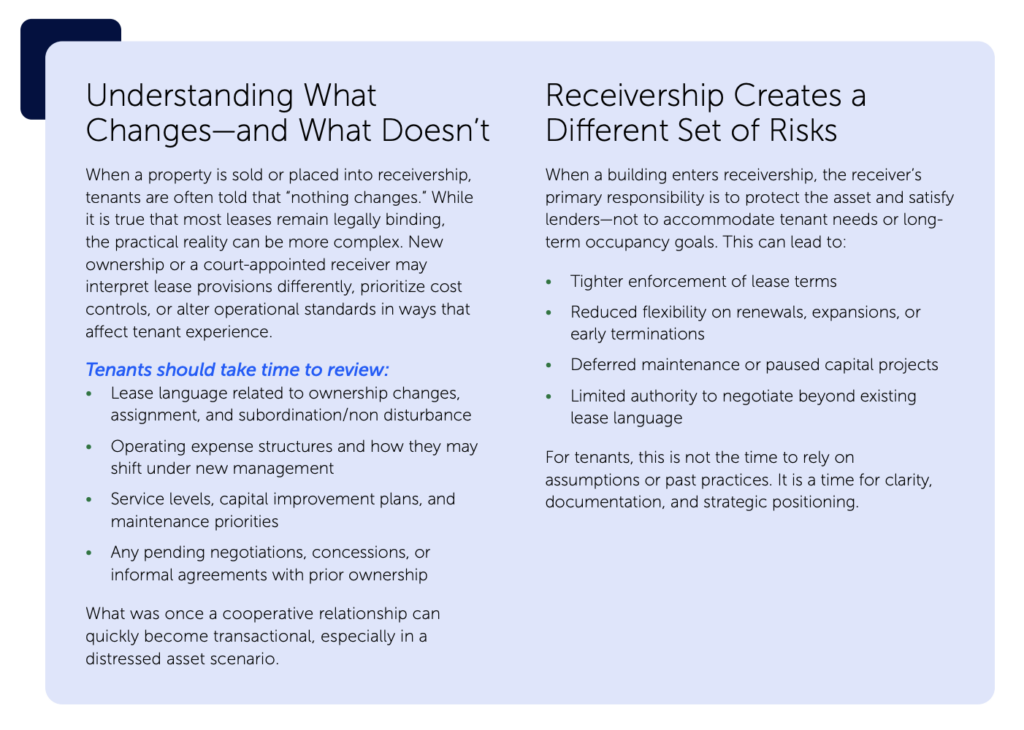
While these transitions often happen behind the scenes, they can have real and immediate implications for lease obligations, building operations, and long-term occupancy strategy. This is precisely the moment when tenants should pause, assess, and ensure they have the right representation working solely in their best interest.
At CBIZ Gibraltar, our conflict-free tenant representation puts your needs first. Here’s what office tenants should keep in mind during ownership transitions:
1. Review Your Lease Carefully
- Know Your Rights and Obligations: Your lease is the guiding document in any ownership transition. Understand provisions related to assignment, termination, subordination, and non-disturbance.
- SNDA Agreements: Confirm if you have a Subordination, Non-Disturbance, and Attornment Agreement (SNDA) in place, which protects you if the lender takes over the property.
2. Monitor Building Operations and Services
- Track Service Levels: Changes in ownership or receivership can disrupt building maintenance and amenities. Stay vigilant about any decline in cleaning, security, HVAC, or repairs.
- Document Issues: Keep records of any service interruptions and notify property management immediately to create a clear record for future negotiations or claims.
3. Understand Financial Implications
- Rent Payments: Clarify where and to whom rent payments should be made during the transition. In receivership, you may be instructed to direct payments to a receiver or a new owner.
- Financial Health of Building: Be aware of building financial stability, potential capital improvements, or deferred maintenance that may impact your operations.
Building ownership changes and receiverships are not just legal or financial events— they are moments that can materially affect a tenant’s cost structure, flexibility, and workplace experience. Tenants who remain passive during these transitions often find themselves reacting rather than leading.
4 .Communicate Early and Often
- Maintain Dialogue: Establish and keep lines of communication with property management, the new owner, or the receiver.
- Stay Informed: Ask about the new owner’s plans, anticipated improvements, or changes to building operations that may affect your space or lease terms.
5. Consult Your Real Estate Advisor and Legal Counsel
- Strategic Guidance: Engage your conflict-free tenant representative, such as CBIZ Gibraltar, and legal counsel early. They can help you assess risk, communicate with stakeholders, and negotiate modifications or protections if necessary.
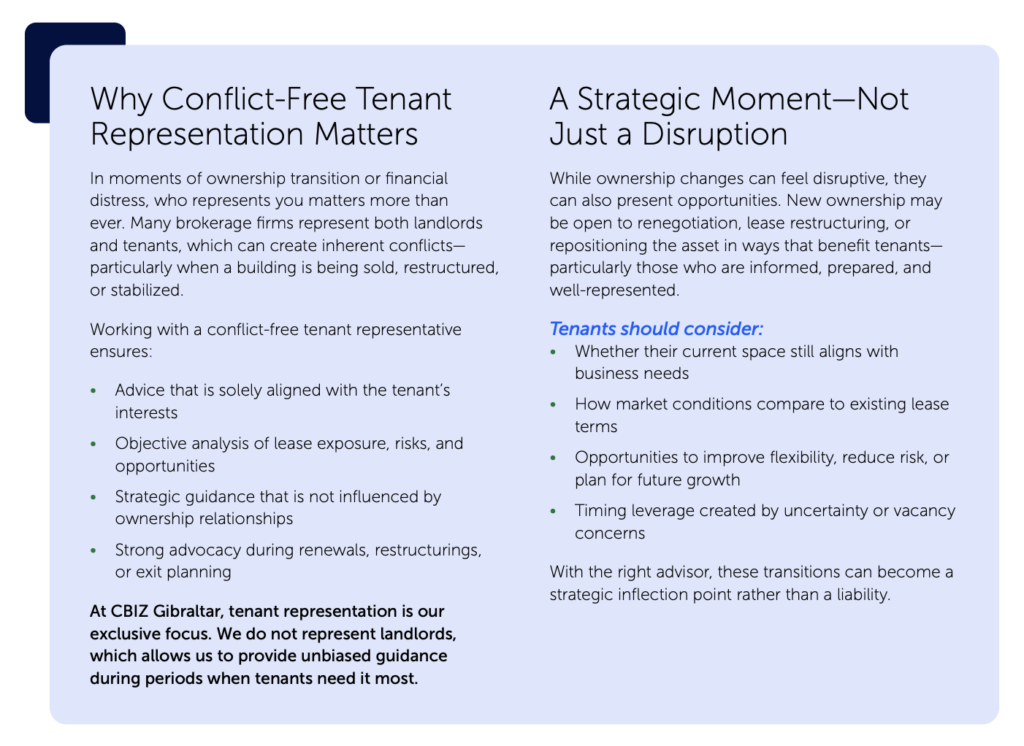
- Lease Restructuring Opportunities: Ownership transitions sometimes offer opportunities to renegotiate terms, extend leases, or secure better concessions.
6. Prepare for Change
- Flexibility Is Key: Be ready to adapt if significant changes occur, such as altered building amenities, new leasing policies, or ownership-driven renovation plans.
- Contingency Planning: In rare cases, changes can impact your business continuity—have a plan for short-term and long-term space needs.
If you’re facing a change in building ownership or receivership, contact us to ensure your business interests are fully protected every step of the way.
Engaging a conflict-free tenant representative allows organizations to navigate uncertainty with confidence, protect their interests, and make informed real estate decisions — especially when the ground beneath them is shifting.